UDM's archive takes Titans through time with 150 years of history
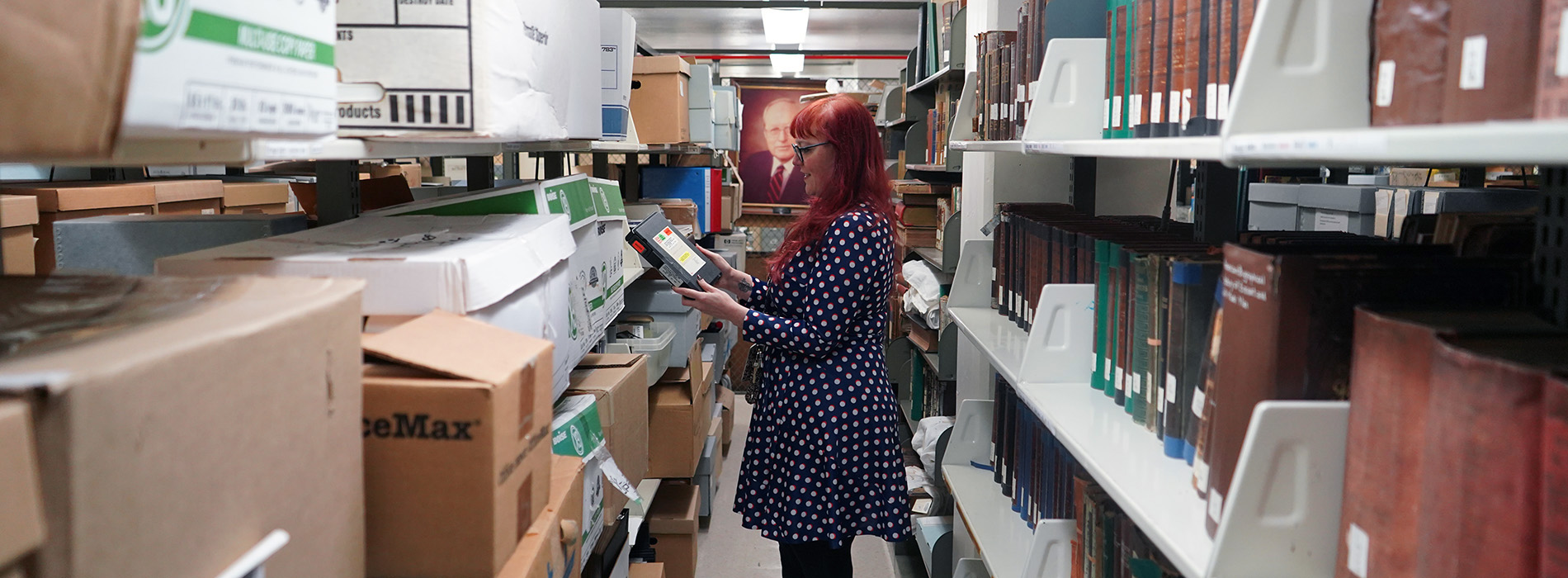
As the elevator in the McNichols Campus Library creaks up to Floor 2A and its doors begin to slide open, those making the ascent may feel as if they’ve stepped into a time machine.
It’s a feeling Mara Powell knows all too well.
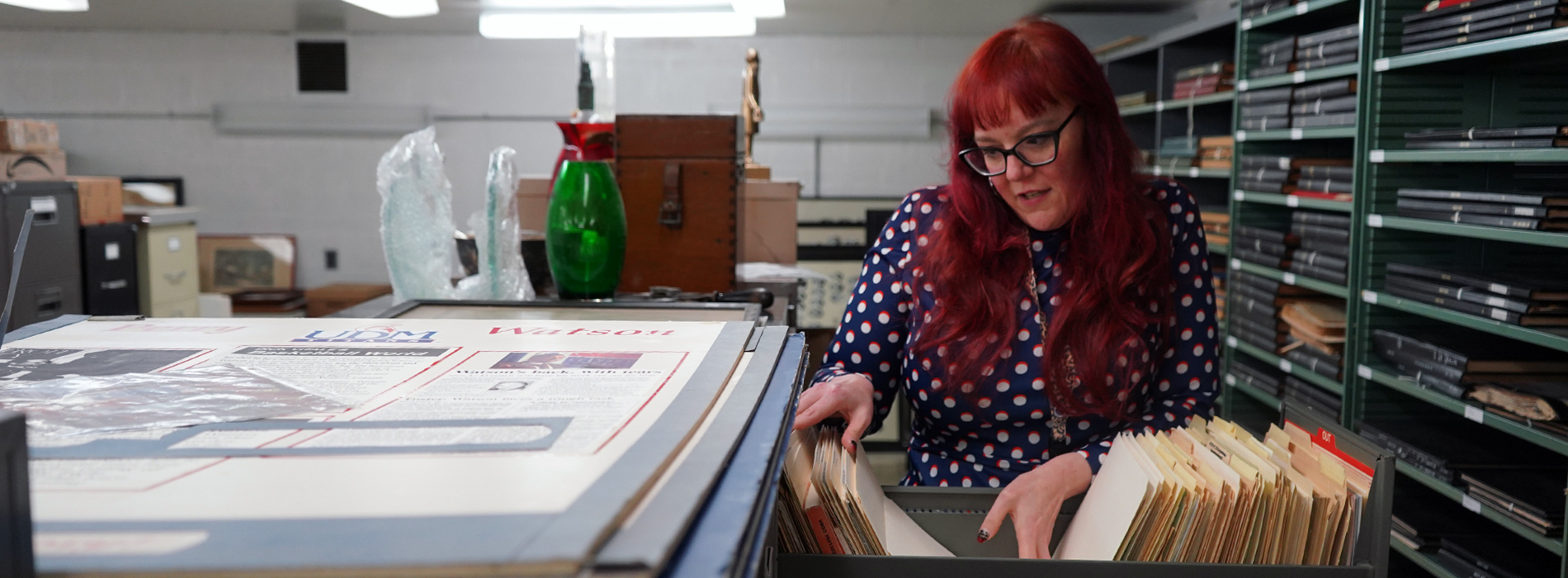
That’s because Floor 2A of the Library is home to University of Detroit Mercy’s archives. Inside are many filing cabinets, tall bookshelves and acid-free storage boxes, which contain hundreds of thousands of books, notes, photos, publications and other unique items spanning the University’s 150 years of existence.
As UDM’s archivist, Powell works with these historical pieces each day. She’s been in the role since summer 2025, taking the reins after longtime archivist Pat Higo’s retirement.
“Every piece in here has a story,” Powell said, “and every person who walked through this campus added to the history here.”
That history makes its way into the archives in different ways, most commonly when people contact Powell with photos or items from their family's time at Mercy College, U-D or UDM. Departments and University employees will also drop off boxes of records fwhen cleaning out offices.
But not everything brought to Floor 2A is archivable.
“It’s essentially like the end of the records management cycle — you’re either going to throw it in the trash or give it to the archive,” Powell said. “Or just give it to the archive and I’ll throw it away for you if we don’t need it, which I think most people prefer.”
UDM’s archive is home to more than 30 individual special collections, which were either donated to or started at the University.
Notable collections include:
- The Varsity News — with more than 1,000 issues dating back to its 1918 start.
- The Black Abolitionist Archive — containing more than 800 speeches by Black abolitionists and around 1,000 editorials from before the American Civil War.
- The Fr. Dowling, S.J., Marine Historical Collection — considered one of the most complete private collections of Great Lakes Marine history, with close to 58,000 items.
- The James T. Callow Folklore Archive — more than 40,000 records of folklore traditions, gathered from 30 years of students’ coursework.
Items in UDM's archives are accessed routinely for things such as research. Or in the case of one United Kingdom family, Powell said they learned that their mother’s lullaby was in the Callow Forklore Archive after Googling its words.
With an entire Library floor filled with historical trinkets and treasures, what makes something worthy of entering the archive? There are a lot of factors to consider.
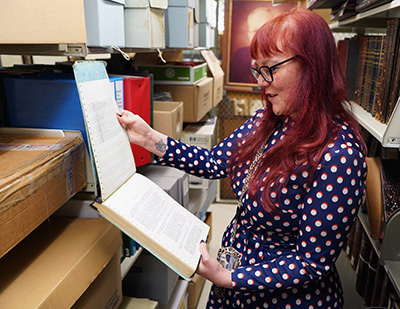 “The most important thing, I think, is does it have some sort of informational value? If I am looking at this 50 years in the future, what am I learning from this?” Powell said. “The hard decision is separating that from historical or intrinsic value. Something autographed by George Washington has intrinsic value, because it’s someone famous, and it has historical value because he’s the founder of our country. But what can we learn about it?”
From climate control to material quality to technology that becomes obsolete over time, there are challenges that come with preserving items that weren’t designed to survive this long. Things like film and tapes can be digitized, but that’s just one step of preservation, Powell said.
“Once you digitize something, I think a lot of people think you throw it away,” she said. “You don’t, because even what you’re digitizing it to will eventually degrade.”
One of the bigger hurdles Powell faces in maintaining the archive is staffing.
“I’m what we call a ‘loan arranger’ — I do everything in the archives,” she said. “I’m the digital archivist, media archivist, acquisitions archivist and reference archivist, all in one.”
Despite these different hats, Powell’s ultimate goal is to make UDM’s archive as accessible as possible.
That starts with inventory, where she would make a note of each box's content and location. Then, she can create a series of items, such as the early years of Detroit College or the University’s athletic department. From there, a finding aid would be implemented to help Powell and visitors better locate what they are looking for.
“I think the main goal of an archivist, other than preserving history, is accessibility,” Powell said. “There’s no point in us preserving this if people can’t access it and learn from it.
“My big project is to make it so that anyone on this campus or in the community can access it, one way or another.”
With Detroit Mercy celebrating its 150th anniversary this year, Powell and the archive have been instrumental in researching the institution’s history. The opportunity to do so has been “kind of like the dream,” Powell said.
“All I want is for people to be as jazzed about archives as I am,” she said. “I feel like when there’s a big milestone like this, that’s when everyone really starts to get curious and interested in history.”
As Powell works with the archive’s historic materials and leaves Floor 2A for the day, the time machine feeling hits her.
“When I was scanning all these photos of the Briggs Building — photos of the construction and dedication of the building, photos of students who are obviously not from today or this era, sitting outside studying — and I walk out the front door of the Library and I see that building today, with people walking around in real time, I’m like, ‘whoa,’” Powell said. “It’s surreal because there are no windows up here. I’m alone and left to my own imagination.”
— By Ricky Lindsay. Follow Detroit Mercy on Facebook, LinkedIn, X and Instagram. Have a story idea? Let us know by submitting your idea.